
From London to Lisieux
Published on 2nd Jun, 2026
Over the past three weeks I have been away, and it has been a rich and encouraging time. I began in London, where I attended the Alpha Leadership Conference at the Royal Albert Hall. Just before that, however, I had the great privilege of celebrating the principal Mass at Westminster Cathedral and preaching there as well. For me, that was a real honour, made all the more memorable by the generosity of Archbishop Moth, who insisted that I use his crozier for the Mass – a slightly unusual gesture, since ordinarily only the bishop of the place uses the crozier. After travelling such a long way, it was quite a beginning to my time overseas.
The leadership conference itself was significant. Although Alpha has Anglican roots, there was a notably strong Catholic presence this year, and that was heartening. I came away with a real sense that there is fresh energy and confidence growing within the Church. That impression deepened in the days that followed, first at a parish renewal gathering in Richmond, and then in France, where I met bishops and priests involved in remarkable work of evangelisation. I heard about students entering the Church in large numbers, about thriving parish initiatives, and about young people gathering in extraordinary numbers for worship. These were not isolated stories. They pointed, I believe, to something larger: a new springtime stirring in the life of the Church.
From there I joined a pilgrimage group in Paris and travelled with them from Lourdes to Lisieux. That journey was filled with spiritual and liturgical highlights. In Lourdes I was able to be part of a Sunday Mass in the great underground basilica, together with bishops, priests and pilgrims from around the world. Along the way I celebrated Mass in a number of profoundly beautiful places, including Sacré-Cœur, Chartres, Mont Saint-Michel, Lisieux, Cannes and Ars, where I was able to use the Curé of Ars’ chalice and say Mass in front of his remains. For our group, and for me personally, these were moments of deep grace. They were also a reminder of the strong French roots of the Church in Aotearoa New Zealand, through Bishop Pompallier and those who helped bring the faith here.
One of the things I carried strongly throughout the journey was a renewed awareness of the Church universal. We in the Diocese of Palmerston North may be at what feels like the ends of the earth, but the Gospel has reached here, and we have our own part to play in the mission of Christ. I was very conscious of that when I greeted the congregation at Westminster Cathedral on behalf of our people here in New Zealand. Across these weeks I found myself grateful for the way the Church continues to draw people together across nations, languages and cultures, and I returned home with a renewed conviction that our diocese should keep looking outward as well as inward.
That sense of hope and responsibility also shaped my reading of Magnifica Humanitas, the first encyclical of Pope Leo XIV. Although it speaks directly to the age of artificial intelligence, it is about much more than technology. At heart, it is a reaffirmation of Catholic social teaching and of the incomparable dignity of the human person. Pope Leo puts a question before us: do we want to build another Tower of Babel, where human initiative ends in disarray and people can no longer understand one another? Or should we direct our efforts and our vision toward rebuilding the walls of Jerusalem? These are the two great images he uses. AI has enormous potential and can be extremely useful and good, but only if it serves the magnificence of the human person. That, it seems to me, is his vision, and it is both true and good.
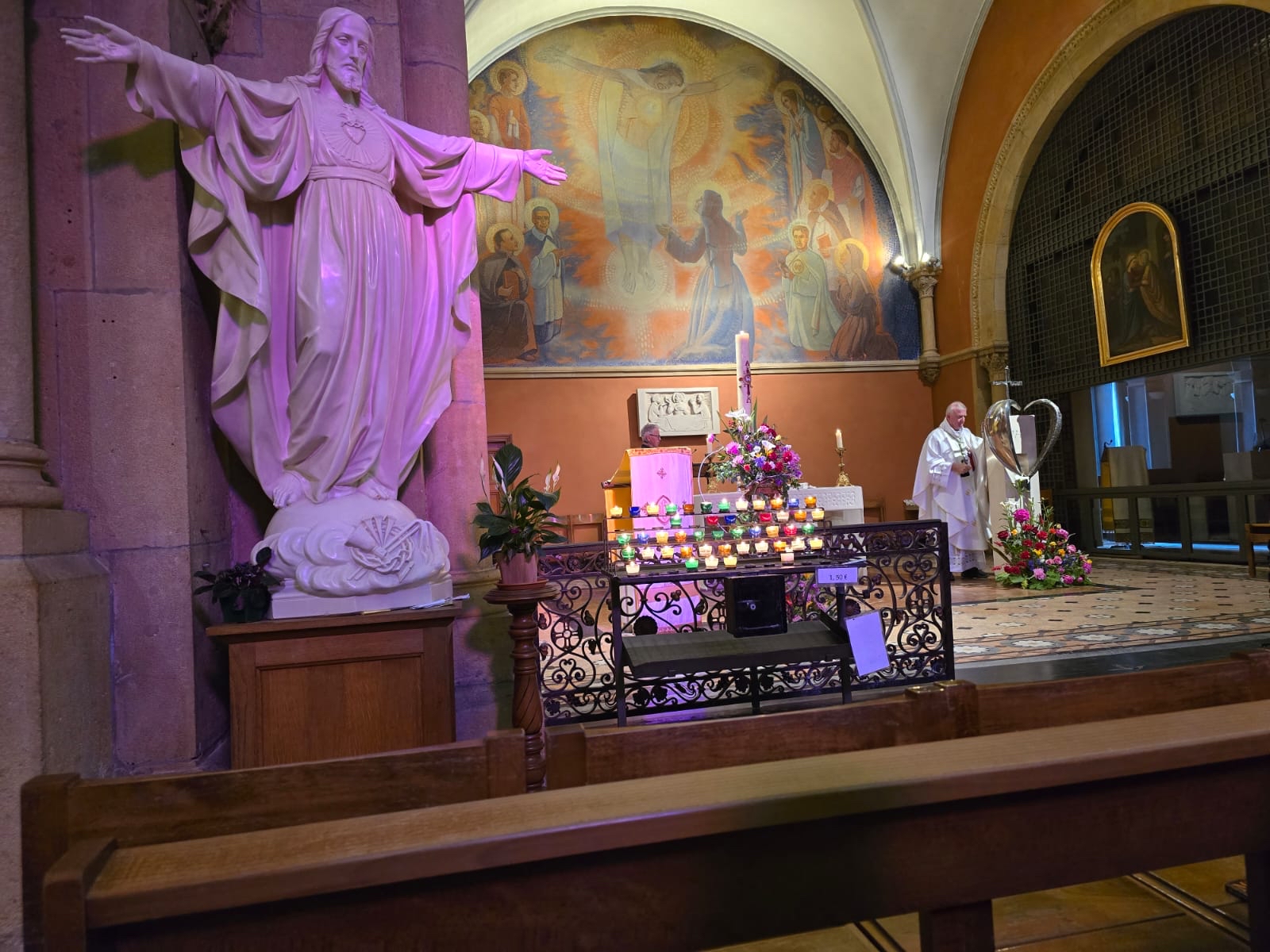
Mass at the Chapel of the Visitation, where St Margaret Mary Alacoque received her visions of Jesus.
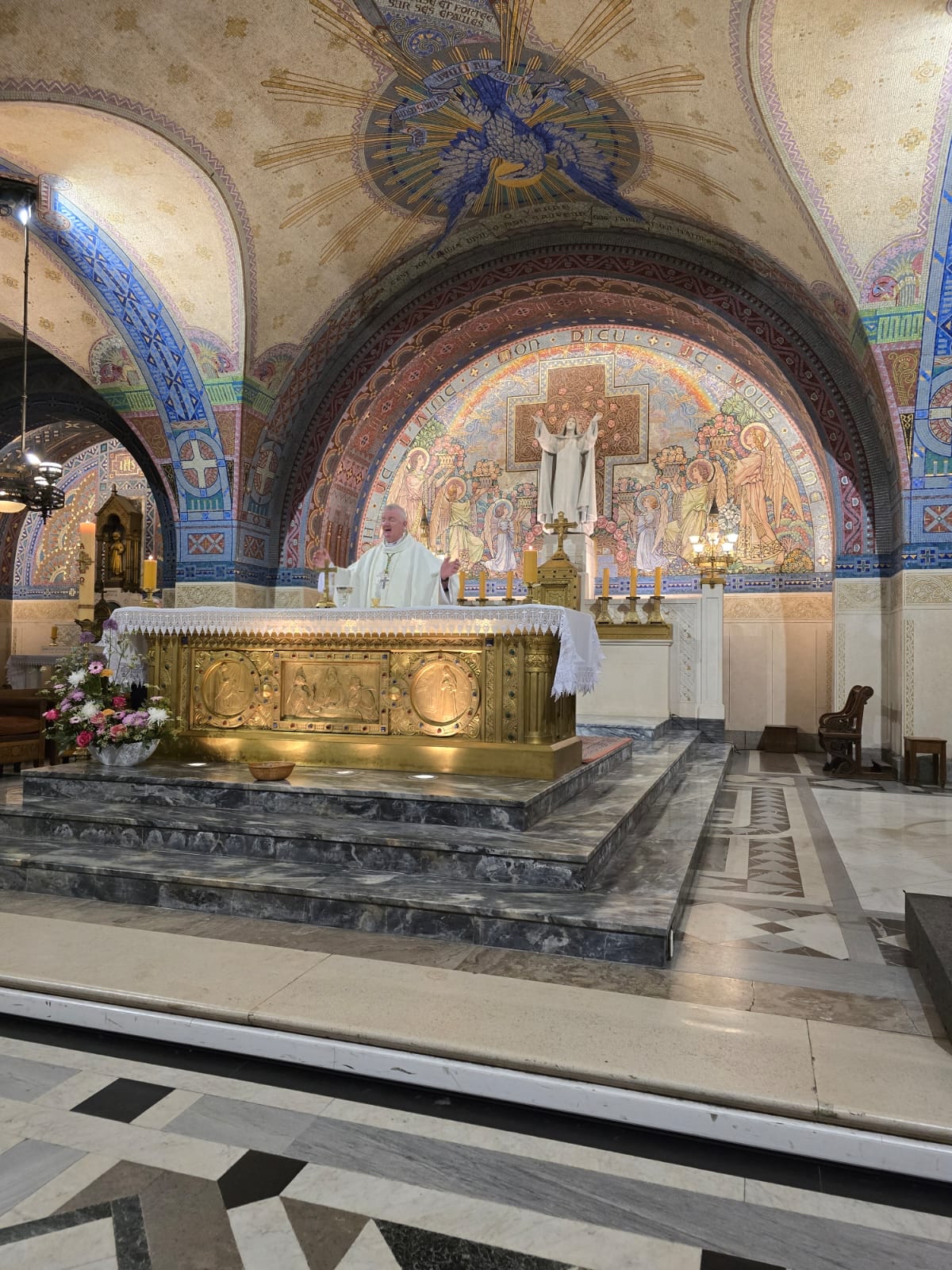
Bishop John celebrating Mass in Lisieux.
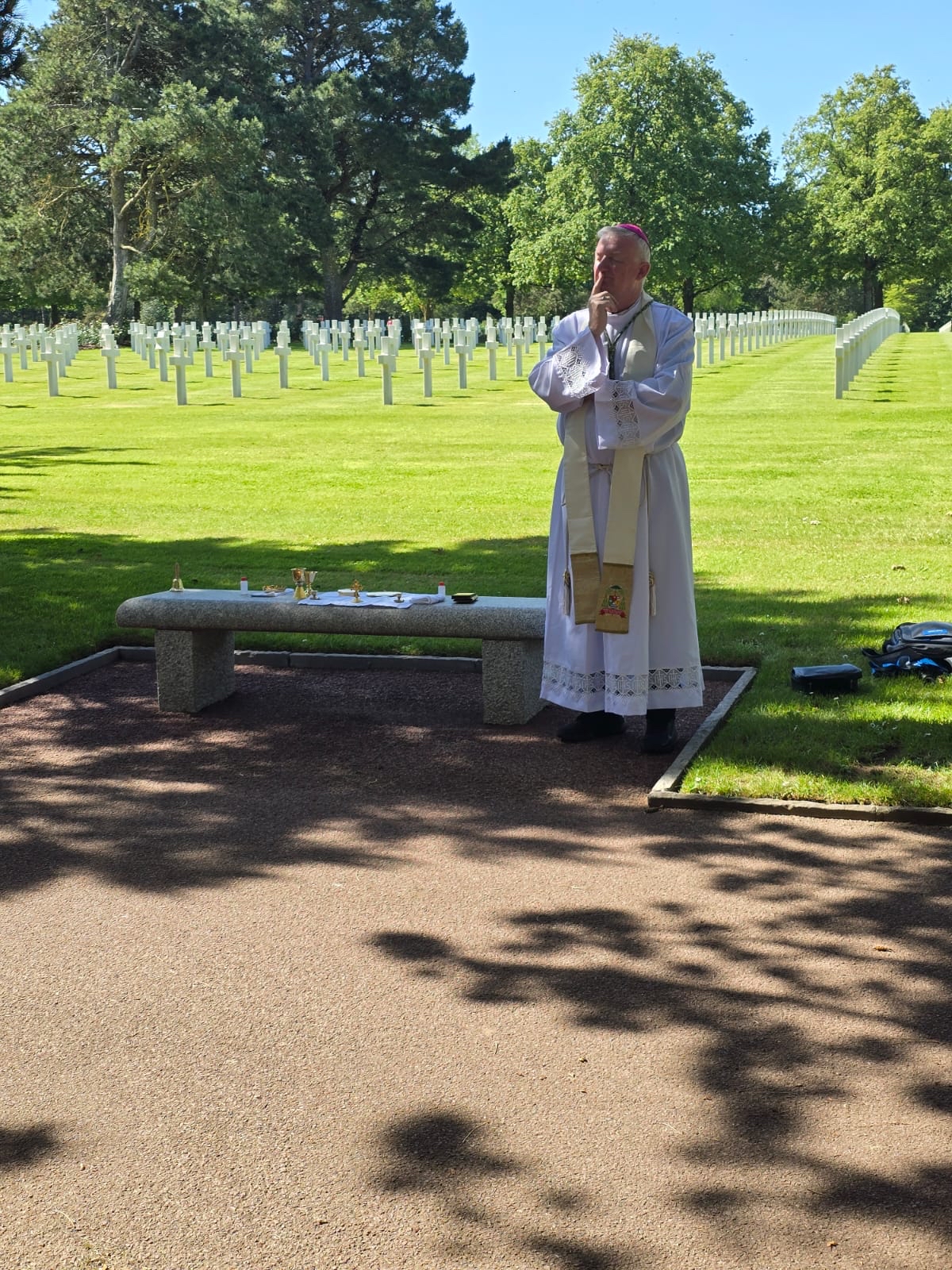
Normandy American Cemetery Mass.
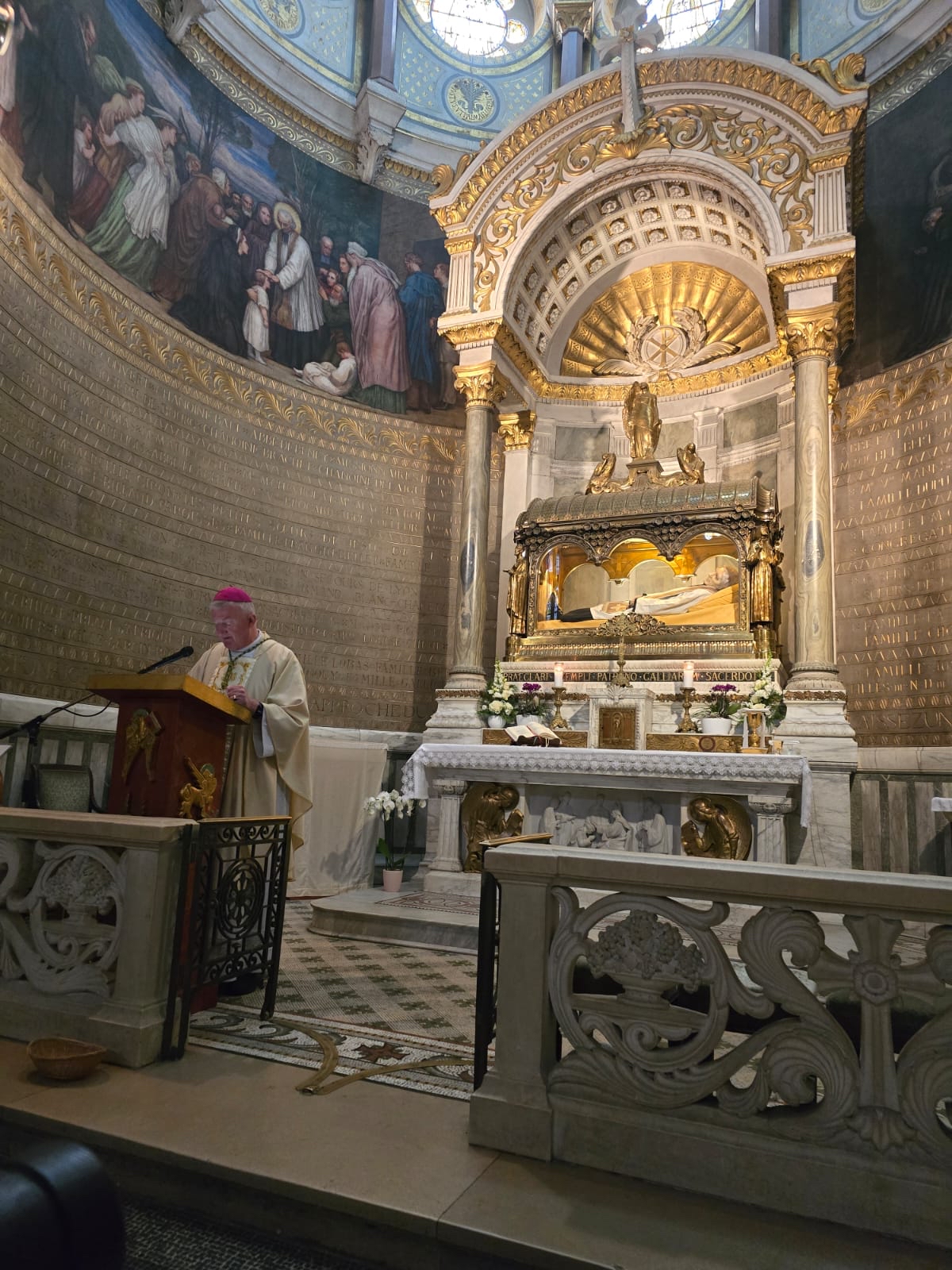
Bishop John celebrating Mass in front of the shrine of St Jean Vianney at the Basilica of Ars in France.
Renewing our life of mission and service
Bishop
Published on 1st Sep, 2026
There are several signs of new life emerging across our diocese. Each is different, but together [..]
Renewing our life of mission and service
Bishop
Published on 1st Sep, 2026
There are several signs of new life emerging across our diocese. Each is different, but together [..]
Prayer, family, young people and priestly identity
Bishop
Published on 4th Aug, 2026
Over recent weeks, I have been reflecting on the life of our diocese [..]
Prayer, family, young people and priestly identity
Bishop
Published on 4th Aug, 2026
Over recent weeks, I have been reflecting on the life of our diocese [..]
Hopeful Signs for the Road Ahead
Bishop
Published on 30th Jun, 2026
Bishop John reflects on cathedral renewal, vocations growth, discernment, and Saint Carlo’s impact [..]